

How To Win a Tender or Bid in 8 Simple Steps
Tenders. They’re usually complex, often confusing and always time consuming - but the reward for winning means a lucrative contract for your business. Sadly there is no magic formula that will guarantee success in the tendering process, and each tender is different. But if you want to increase your bid success rate, there are a number of steps you can take to help you win.
Tenders. They’re usually complex, often confusing and always time-consuming. But the reward for winning means a lucrative contract for your business. Sadly, no magic formula will guarantee success in the tendering process, and each tender or bid is different.
Some tender issuers will focus heavily on price, while others will focus on your approach to health, safety, quality and the environment or how well you demonstrate your skills and experience.
But if you want to increase your bid success rate, you can take several steps to help you win.

Here are my top tips:
Don’t waste your time on the bids you can’t win (and if you’re struggling to find them, check out how to unearth them here). Not every opportunity will suit your business, so focus on the tenders that are a good match for your business, your resources and your schedule.
Don’t just keep recycling the same old tender response material — make sure you answer the tender questions precisely as they are asked. I’ve seen loads of unsuccessful tenders where the business either hasn’t provided the evidence required or has simply added a heap of marketing material to the response and expected the tender evaluation panel to hunt through it to find the answers they’re looking for.
Make sure your response is complete. Don’t leave any blanks on your bid submission letter — even if the answer is no, try creating a story around it. For example, if the tender asks if your Health & Safety Management System is certified and isn’t, say something like — “We have invested significantly in developing and implementing our Health & Safety Management System. This system meets the requirements of ISO 45001 but has not yet been independently certified”.
Make your response clear — don’t clutter it up with information they haven’t asked for, and don’t leave anything out if they have asked for it.
Make sure it’s well organised and easy to read - write your tender response in a conversational tone and break up the text with headings, tables, charts and images where relevant.
Make sure it’s accurate — although it’s okay to be a little aspirational in your response, it’s not okay to say anything you can’t live up to. Regarding accuracy, it’s always a good idea to triple-check your pricing, as a little mistake can mean the end of your bid or potentially the end of your business.
Showcase your awesomeness. Yes, this is your time to shine, so make sure you really sell your competitive advantage and what you bring to the table during the bid submission process. Show how you reduce risk by offering complete solutions and superior customer service.
Sell the value of a long-term relationship. This step is crucial if you are the incumbent supplier and you want to get your contract renewed. Point out that you have developed strong relationships with the tender issuer and add some examples demonstrating how you have gone the extra mile or been able to utilise your existing knowledge of the contract to resolve an issue quickly.
My Final Thoughts
That’s it! Follow those tips, and you can increase your chance at success. If you need a hand, though, I’m here to help. I’ll happily review your tender documentation and let you know what you could do better, or if you’re looking for someone to just take the whole tender or bid process off your hands, I’m your girl. Just give me a call at 0400 514579, shoot me an email at pauline@tenderwise.com.au or contact me here.
Want to know what my clients say about my services? Check them out here.

For a Great Tender Submission — DIY or Get Professional Help?
Writing a tender submission that ticks all of the boxes can be a pretty complex business, and it’s not just about answering questionnaires or filling in forms. It’s about constructing a rational and compliant submission that tells an awesome story about your business so you’ll have the best chances of winning that lucrative contract.
So, you’ve got a tender that looks just right for your business and want to give it a shot. If it’s your first tender submission, you’re probably wondering how to go about it, if you’ve got the time and energy to put into it, and whether you should just get an expert to do the hard work for you.
Writing a tender that ticks all of the boxes can be a pretty complex business, and it’s not just about answering questionnaires or filling in forms. It’s about constructing a rational and compliant submission that tells an incredible story about your business so you can win that lucrative contract.

10 Reasons to Get Professional Help
If you choose to go down writing the tender response the DIY route, well done to you and good luck — here are some tips that will help you do a great job.
But if your writing skills are a bit on the ordinary side, here are ten reasons why we think you should use the services of a professional tender writer.
1. Tenders can be Intricate Documents
For this reason, your response needs to showcase your expertise, experience, and, of course, your proven track record. Mass amounts of documents usually come along with the tender pack.
So, a professional tender response writer can evaluate which of those documents need to be included in the response and whether there’s any tricky stuff lurking in the depths of the requirements.
2. It’s Time-Consuming to Write Them
Typically, a professional tender writer will complete your submission much faster than most business owners for whom writing is not a core skill. Completing a full tender is very time-consuming if you have to do it yourself.
Tender writers are very experienced in the terminologies used in a wide variety of complex tender submissions, including Government and Corporate tenders.
3. Great Value for Your Money
Once a professional tender writer has completed your tender, you’ll have a well-written document that you can use parts of in your response for your next tender.
Typically, you should be able to use around 50% to 70% of the existing text to cut and paste into your new tender. That means great value for your money as you can reuse the text over and over again.
4. It’s Reusable
You can use a big chunk of that information that the professional tender response writer had put together for other purposes, such as advertising and sales materials, brochures, flyers, websites, etc.
That represents more savings as you no longer have to make a separate investment for all those purposes.
5. Writing Tenders Requires Skills and Experience
Creating awesome tenders requires the skills and experience of an excellent and professional tender writer.
Depending on the frequency of your need to create tender responses, you can hire an internal tender writer dedicated to doing tenders, or you can outsource someone with such skills and expertise on a per-need basis, like TenderWise.
6. Tenders have to be Compliant
A professional tender writer ensures that your tender complies with each Request for Tender (RFT) requirement. Failure to adhere to these requirements is the major reason why many tenders don’t make it on the first attempt.
If no one within your organisation has this expertise, investing in a professional tender response writer might be a good idea.
7. A Professional Tender Writer can Complete all Documents
Most tenders want to see evidence of your Health & Safety, Environmental and Quality Management Systems. If you don’t already have these, a professional writer can usually get the full suite of documentation for you that’s aligned with all of the required ISO standards.
8. They Need Trained Eyes to Review and Proofread
Aside from writing, tenders need to be reviewed and proofread thoroughly by a set of trained eyes. The review process performed by a professional tender response writer can be the difference between a winning and a losing submission.
Without this process, you are at risk of non-compliance and other errors that could easily cost you the bid.
9. Ultimately, it's all about establishing teamwork.
The professional tender writers' first task is to understand your business. Secondly, they will know why you think you should win. They will bring you invaluable objectivity that internal personnel could have without bias. Since this is the case, they will be able to challenge you to identify facts to support your answers for each question accurately.
10. It’s Cost-Efficient
In the words of Red Adair, the world-famous oil well firefighter – “if you think it’s expensive to hire a professional, hire an amateur”, and see how much that costs you.
My Final Thoughts
If you would like to make sure to make the most out of your investment for your winning tender submission, TenderWise can help.
We've written loads of winning tenders across a wide range of industry sectors, including cleaning tenders, construction tenders, professional services tenders, security tenders, and more. We can help you, too. Just give Pauline a call or a chat on 0400 514579, email me at pauline@tenderwise.com.au or contact us here.
Want to know what my clients say about my services? Check them out here.

Are You Using the Right Words in Your Tender Submissions?
When it comes to great tender response submissions, words mean a lot. If you’re not using clear, concise and compelling language in your response, you’re not going to convince the tender panel that your business is hands down the best company for the job.
When it comes to great tender submissions, words mean a lot. If you’re not using clear, concise, and compelling language in your response, you won't convince the tender panel that your business is hands down the best company for the job.
At TenderWise, we’ve helped loads of businesses win tenders, but if you want to take the DIY route and write the submission yourself, here are our top tips:
Keep Your Response Simple.
The reason the KISS (Keep it simple, stupid) principle is so well known is because it works, even to tender responses. It’s smart, and it’s a good reminder to keep things, well – simple. Flowery words, overly technical content and industry jargon, may make you feel good, but they can be a real turn-off to your audience.
Keep Your Response Clear.
And focus and never say something in 10 words when five will do.
Write in a Conversational Style.
If you wouldn’t speak it the way you’ve written it, give it another go until it reads like a conversation.
Be Convincing.
Tell a story. Answer the questions in the tender response document by giving examples of hhow you have achieved the same outcomes for another similar client.
BUT (and it’s a big one) — always make sure that what you write is relevant to the question being asked. Don’t dive off onto a tangent just because you have something you want to say, but there isn’t anywhere apparent to put it.
Always Include a Cover Letter.
But that’s unless your tender template asks for an Executive Summary. It’s an excellent opportunity to highlight what’s so great about your business and how you have the skills and experience to deliver the required tender outcomes.
Don’t just Copy and Paste Your Tender Responses from Your Last One.
Sure, you can recycle content, but make sure it’s relevant to the question and read it through. I’ve seen plenty of tenders where content has been copied from one submission to another regarding the tender issuer not being updated.
Always Check Your Spelling and Grammar.
There's no excuse for getting it wrong when a spelling and grammar checker (such as the one built into Microsoft Word) only takes a few minutes to run. Poor spelling and grammar are a real distraction for the reader, and it just makes your business look sloppy.
Stay within the Word Count Limits.
If you’ve been told that there are word count limitations for your tender response, then make sure you stick to them — it will likely be penalised if you go over the limit.
Use Positive Terms
So, “will” — not “would” and “can” not “could”.
Use Meaningful Headings to Break Up Your Text.
And also add some visual appeal to your submission.
My Final Thoughts
If you’ve got a tender you want to respond to but don’t have the time or the inclination to develop powerful and compelling tender submissions TenderWise can help you. Call me, Pauline, at 0400 514579, email me at pauline@tenderwise.com.au, or fill out the form here for a completely obligation-free chat.

3 Crucial Elements That Will Help You Win That Tender Response
Writing. You either love it or hate it but no matter how you feel about it, if you’re going to take the DIY route to submitting a tender response we’ve got some tips to help you put your best foot forward.
Writing — you either love it or hate it, but no matter how you feel about it, if you’re going to take the DIY route to submit a tender response we’ve got some tips to help you put your best foot forward.
Give it some eye candy
Visual appeal is important! Of course, you need to write your response well, demonstrate how awesome your business is, and highlight how you exactly meet the tender criteria. But no one wants to read through a boring-looking submission.
So, add some headings and images to break up the text, add an eye-catching cover page and don’t be afraid to use some diagrams, charts or infographics to make it more interesting.
2. Answer the questions
It really is quite astounding how many tender responses I see where the information that the tender issuer wants simply isn’t provided. Ensure you thoroughly read the requirements before starting the response submission because many of the questions in the response can be tricky.
Quite often, the questions in the response schedule will be general statements along the lines of “Demonstrate your ability to meet the specification” or “Provide three referees for similar projects”. The important thing here is to ensure your response highlights how you meet the brief.
When demonstrating your abilities, refer to each of the requirements in the specification and then write about how your experience relates to each in the tender response document.
When you’re providing referees, ALWAYS make sure you give a detailed overview of what you did, when you did it, and how it is similar to the project you’re tendering for.
3. Include relevant supporting information
Supporting information is your best friend — just make sure that whatever you have is clearly identified in the main submission, e.g., “We have included more information about our Quality Management Processes in Appendix A, a copy of which is attached with this submission”).
Always make sure any supporting information is relevant and that (just like your main submission) it has a nice cover page. If you’re including lots of information in one Appendix, make sure you include a Table of Contents.
Need a hand?
If you need a hand with your tender response or want to prepare for the next one by developing standard responses you can cut and paste from, TenderWise can help. We've written many winning tenders across a wide range of industry sectors and can help you, too. Just give Pauline a call for a chat at 0400 514579 or contact us here.

FOUR Things You ALWAYS Need to Include in Your Tender submission
Tenders come in many different shapes and formats but there are usually some common threads in all tender requests, so matter how specific or vague a particular question may be, there are 4 main areas that you'll need to respond to for nearly every tender.
Tenders come in many different shapes and formats. Still, there are usually some common threads in all tender requests, so matter how specific or vague a particular question may be, there are four main areas that you'll need to respond to for nearly every tender submission.
Demonstrate Your Experience
The tender issuer wants to know that you've got the skills and expertise to get the job done, so this is your chance to showcase your awesomeness. You should include:
Your Capabilities
Precisely what you do and how long you've done it for.
Your Capacity to Deliver
What resources do you have (people and equipment), and how you would structure yourself organisationally to deliver the services.
The Experience of Your Key People
Who they are, their qualifications, what they've done and how they would add value to the tender response.
Your Customers
Make sure you profile customers with similar requirements to those in the tender documents and then reinforce the contract similarities.
Show How You'll Manage the Project
It's your opportunity to demonstrate that you've got the right systems and processes to manage whatever needs to be delivered. It includes things like:
Management roles and responsibilities
Your Quality, OH&S and Environmental Management Systems
You back office processes
Your service standards
Your reporting ability
Any key performance indicators you want to set
Contract and Relationship Management
Include information about the person or people who will be responsible for the tender response document and contract compliance and the quality of client relationships at all levels for the scope of work. Include previous experience, qualifications, and your process for resolving complaints.
Innovation and Value Add
If you have any cutting-edge equipment or processes that you use, make sure you highlight them. Innovation doesn't need to be groundbreaking —it can focus on more efficient equipment or utilising cloud-based and mobile applications to be more productive. If you can't think of anything that you do that's particularly innovative or adds extra value, now's the time to research and refer to a tender response template most suited to your business.
Need a hand?
If you need a hand with your tender submission or if you'd like to get ready for the next one by developing some standard responses you can cut and paste from, TenderWise can help. We've written loads of winning tenders across a wide range of industry sectors and we can help you too.
Just give Pauline a call for a chat at 0400 514579 or contact us here.

Is Formatting Important When it Comes to Tender Response Submissions?
Want to make your tender submission really stand out? It's time to think about your formatting! Sure, many tenders are pretty prescriptive when it comes to the tender response schedules - but there are plenty of opportunities to make your submission shine.
Do you want to make your tender response submission really stand out? It's time to think about your formatting! Sure, many tenders are pretty prescriptive when it comes to the tender response schedules — but there are plenty of opportunities to make your submission shine.
Here are my Top Tips:
Use Headings as much as possible.
No one wants to plough through three or four pages of your response to a specific question if it's just paragraph after paragraph. But if you break the information up into logical sections using headings and subheadings, your submission won't just look good — it'll be a lot easier to read.
2. Add images.
If the tender response template permits it, add some images of your work, tour equipment, or your staff.
3. Include a table of contents.
It makes it much easier for the evaluation panel to find the information quickly rather than wading through a pile of pages to find a specific area of your response.
4. Include a cover letter.
It should be a one or two-page overview that showcases your business and lets the tender evaluation panel know why you're the best candidate for the job.
5. Incorporate a supporting document with the tender response.
Usually, you'll need to include one of these anyway to provide certificates of currency, policy statements, OH&S details, etc. So, make sure it's eye-catching.
A nice cover page will make it stand out, and again, make sure you include a table of contents. If the response schedule is very restrictive, your supporting document is your opportunity to add all that extra stuff that you couldn't fit into the main response.
6. Always read the tender document carefully.
Take this as a word of caution because sometimes they will specify what you can and can't do as part of your tender submission, and you want to avoid blowing it just because you didn't read the guidelines.
7. Include diagrams and flowcharts.
And if you need to include an organisational chart, do yourself a favour and do it using Word's SmartArt feature to create a professional-looking org chart in next to no time.
Wrap Up
These are a few tips from me that you will find helpful. But if you'd like to chat a little more about what you can do to improve your tender response submissions, just call me at 0400 514579 for a chat, email me at pauline@tenderwise.com.au, or fill up the form here.
Happy tendering and until next time! — Pauline

How to Price Your Tender Response
As a tender writer, I'm often asked for help in pricing the bid and while I can discuss pricing strategies with you, when it comes to the price you want to put forward, I can't tell you what a winning price looks like. You know your business, your operating costs and who your competitors are, so no one is in a better position than you to understand your market and your cost model.
As a tender writer, I'm often asked for help in pricing the tender response. While I can discuss pricing strategies with you about the price you want to put forward, I can't tell you what a winning price looks like.
You know your business, your operating costs and who your competitors are, so no one is in a better position than you to understand your market and your cost model.
But I can help you with a few simple tips so you understand the most essential issues regarding price.
Ensure you've read the tender submission pricing table and understand what the issuer is looking for. It may sound simple, but I've worked with many clients who think they can put forward a whole contract price when the response asks for this to be broken down into labour cost hourly rates, material costs, and guaranteed mark-ups on certain services.
If the price you put forward doesn't meet the pricing response criteria, you'll be dead in the water before the rest of your tender is read.
If you don't think you can win it, don't waste your time and effort with your bid submission for it. Again, it might be a blinding flash of the obvious bleeding, but if the tender isn't a good fit for your business, the most competitive pricing in the world isn't going to win it for you.
Always highlight any value-add with your price, even if it's something simple. Whether it's half-price food at the end of the day for a catering business or some extra spit and polish for a cleaning business, if there's something else you can add that's included in the price, then shout it from the rooftops.
Explain your pricing. Some tender response schedules are as clear as, well, mud. It may be that the tender issuer doesn't understand your business, or it may be an error, so it's always a good idea to clarify anything that doesn't look right.
Then make sure you explain anything that the price depends on. So, for example, if you're bidding for work at 7 out of 10 sites, your tender submission should clearly state that the price is based on you winning the bid for all seven sites.
Check if the pricing is required, including or excluding GST. It's simple, but if you get it wrong, you could lose the bid because your pricing is 10% higher than you meant it to be, or you could win the bid and instantly lose 10% of your profit margin.
Pauline’s Note
Need a hand with your tender response? Give me a call at 0400 51457, email me at pauline@tenderwise.com.au, or fill out this form for a chat about the best strategy to create a winning tender submission.

8 common mistakes I see in DIY tender submissions - Expert tips
As a tender response writer who has written hundreds of tender submissions, I often see tenders that my clients have prepared for earlier bids that didn't win business. Here's the top 8 mistakes I see in DIY tender submissions.
As a tender response writer who has written hundreds of tender submissions, I often see tenders my clients have prepared for earlier bids that didn't win business. Although many factors are taken into account when appointing the winning bidder (and obviously, price plays a huge part in the mix), I come across a number of common mistakes when reviewing previous submissions.
If you feel comfortable writing your own tender responses, here's a little advice from my experience:
Even if you've done loads of work for the tender issuer and they know you well, don't assume that the tender review panel will consider this when evaluating your submission. The members of the review panel may or may not know you, but generally speaking, most tenders will point score to assess the suitability of your response. In short, write your tender submission as if you are entirely unknown and include detail substantiating your reputation.
It's not enough to refer to previous work you've done - to truly demonstrate that you're an expert in your field, you need to articulate how you achieved what you did clearly to demonstrate your experience.
Don't include broad statements that are off the point. Use the right words, and stick to the questions and answer them thoroughly.
Never cut and paste information from previous tenders or marketing information without confirming it's relevant to the current tender.
Don't deviate from the response template or response format requested. You might already have a generic tender submission that contains lots of excellent information. Still, if you don't present it in the format requested by the tender issuer, you'll lose valuable points when your submission is evaluated. Keep in mind that formatting is important.
Make sure you fully understand the requirements of the tender. Your submission should demonstrate that you know the problem and what the tender issuer is trying to achieve. Never submit generic motherhood-type statements that don't show how well you understand what is being asked for.
Presentation matters - make sure your tender is clearly laid out, use headings and subheadings, always include a table of contents and add a visually interesting cover page.
Never submit a tender response with a cover letter for tender submission that summarises everything that makes your business the best company for the job.
That's my top 8 tips based on the common mistakes I see small businesses repeatedly make when making their own tender submissions.
If you'd like a hand with your tender, I'm here to help - just call Pauline on 0400514579 for a chat, or shoot me an email at pauline@tenderwise.com.au.

TenderWise Wins Again - 5 Year Painting Contract
We've done it again. We've helped our valued client, Mickey Curran Painting in WA win BIG! Mickey's won a 5 year contract to carry out maintenance works to 80 0Government facilities including all WA schools, TAFE's law courts, fire stations, bus depots and train stations.
We've done it again. We've helped our valued client, Mickey Curran Painting in WA win BIG! Mickey's won a 5 year contract to carry out maintenance works to 80 Government facilities including all WA schools, TAFE's law courts, fire stations, bus depots and train stations.
It was a big job but we're so pleased we were able to help Mickey secure this contract. Information developed by TenderWise included:
All response documentation using the tender forms provided by the tender issuer, Programmed Facility Management, who were engaged by the WA Government's Building and Management Works to deliver a range of maintenance services across 7 Government agencies.
Compliance requirements
Demonstrated experience of the company
Demonstrated experience of personnel
Organisational Delivery approach
Health and Safety Management Plan
Health and Safety Induction and Training Program
Drug and Alcohol Policy and Procedure
Quality Manual
Employee details, inductions and qualifications
Organisational chart
Buy Local response
We didn't have long to turn this around (just 7 days) but we made it with an awesome result. Even Programmed FM acknowledged the quality of the submission, with the Senior Contract Administrator stating "we wish to compliment Pauline from TenderWise for a comprehensive and impressive suit of documentation and thank her for her assistance in obtaining Silver rating for your company".
If you have an awesome business but have no idea where to start when it comes to pitching for business or creating a tender submission, give Pauline a call on 0400 514570 today, or email pauline@tenderwise.com.au. We're here to help!
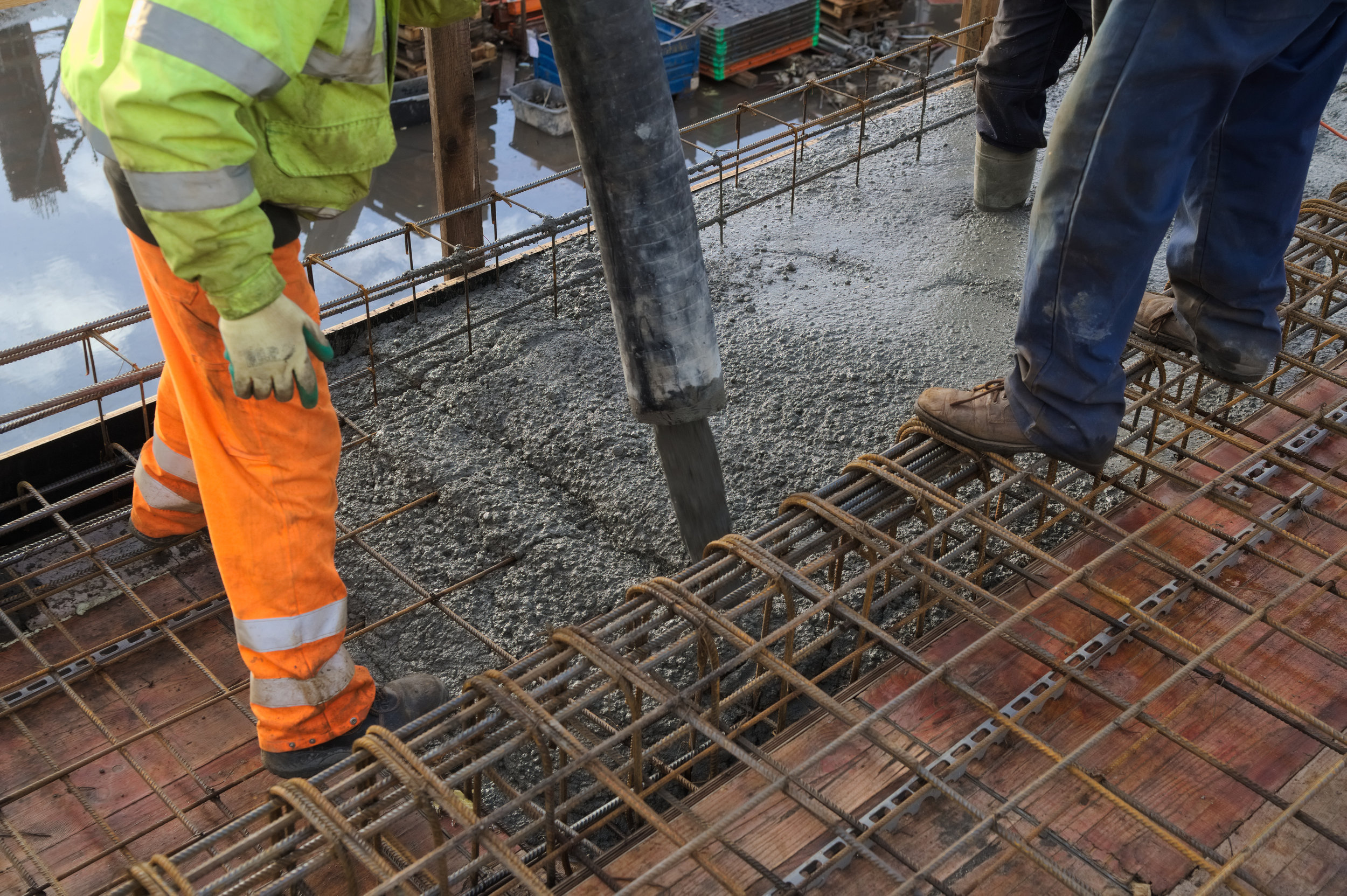
How to Write a Winning Concrete Pumping Tender Submission
Concrete pumping is a highly technical business using equipment that costs a LOT of money. When you invest heavily in equipment, you want to make sure that equipment is being used to generate income as often as possible and for many concreting businesses that means pitching for large-scale Government and Commercial projects.
Concrete pumping is a highly technical business, using equipment that costs a LOT of money. When you invest heavily in equipment, you want to make sure you use them to generate income as often as possible. For many concreting businesses, that means pitching for large-scale Government and Commercial projects.
Here are a few tips to help you create a winning tender submission that's head and shoulders above what your competitors may produce.
Hire a professional (like TenderWise!). We've written hundreds of responses and have worked with many concreters and other trades to produce winning tenders. We know how to ensure your response fits all relevant criteria and reads well.
Focus on health and safety matters. If you don't already have a comprehensive OH&S Management Plan and Site Safety Plan, it's time to get it organised. Your tender writer should be able to produce both of these for you.
Think about risks and how to control them. Concrete pumping is a high-risk business, and TenderWise recently wrote a comprehensive document, "Controlling Risk: Concrete Pumping Operational Guidelines", for a client as part of the overall submission.
Remember the environment. Many Commercial and Government tenders these days will want to see your Environmental Management Plan. If you don't already have one, it's time to get it organised. Your tender writer should be able to produce both of these for you.
The new buzzword in tender responses is sustainability. More and more tenders are asking for a copy of your sustainability policy and evidence of its application in your business. If you don't already have it, it's time to get one. Again, your tender writer should be able to produce both of these for you.
Most State Government tenders love it when you can demonstrate how you are improving the skills of local people, so if you are upskilling some of your hosemen to become pump operators, make sure this comes through in your response.
Check the requirements of the tender response and demonstrate as much as possible how your skills and experience fit the tender specifications. Try to include references to some previous projects similar to the project you're pitching for.
Include details of your crew's experience — it really matters!
Final Thoughts
These are just a few tips to help you on your way to a winning concrete pumping submission. But if you need a helping hand, then TenderWise is here to help. Just shoot us an email at pauline@tenderwise.com.au, fill out this form, or call Pauline directly on 0400 514579.