
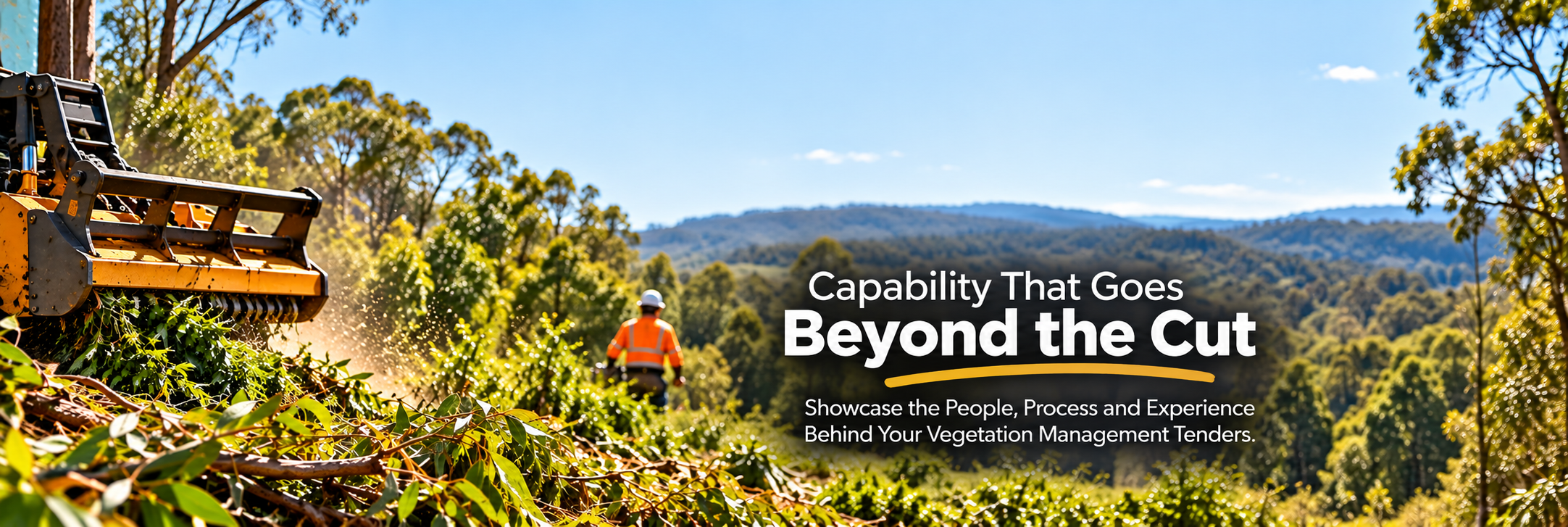
Vegetation Management Tenders
Vegetation Management is about Much more than Cutting Things Down
From the outside, vegetation management can look straightforward.
Trees need pruning. Grass needs slashing. Weeds need treating. Vegetation needs clearing.
But large vegetation management contracts aren't simply about what gets cut, cleared or sprayed.
They're about where the work happens, what surrounds it and how every job is controlled.
Your crews may be working beside live traffic, power infrastructure, rail corridors, waterways, public spaces, private properties or environmentally sensitive areas. They may need to manage changing weather, fire risk, protected vegetation, biosecurity, public access and multiple crews spread across a large geographic area.
A strong tender needs to show the evaluator that you understand all of it.
TenderWise helps vegetation management contractors turn their practical experience, people and systems into clear, persuasive tender responses.
You know vegetation management. We know how to showcase your capability.
Vegetation Management Tender Writing for Government, Utilities and Infrastructure
Vegetation management tenders can cover anything from a defined clearing project to a multi-year maintenance program across thousands of kilometres of infrastructure or hundreds of individual sites.
Depending on the opportunity, you may need to demonstrate capability across:
Arboriculture and tree maintenance.
Tree pruning and removal.
Utility vegetation management.
Roadside vegetation management.
Rail corridor vegetation management.
Mowing and slashing.
Brush cutting.
Mechanical vegetation clearing.
Mulching.
Weed management.
Herbicide application.
Firebreak and fuel reduction works.
Bushfire mitigation.
Easement and right-of-way maintenance.
Storm response.
Hazardous tree management.
Environmental restoration.
Green waste management.
Reactive and emergency works.
Programmed vegetation maintenance.
The tender needs to do more than list those services.
It needs to demonstrate how your business will safely and reliably deliver them.
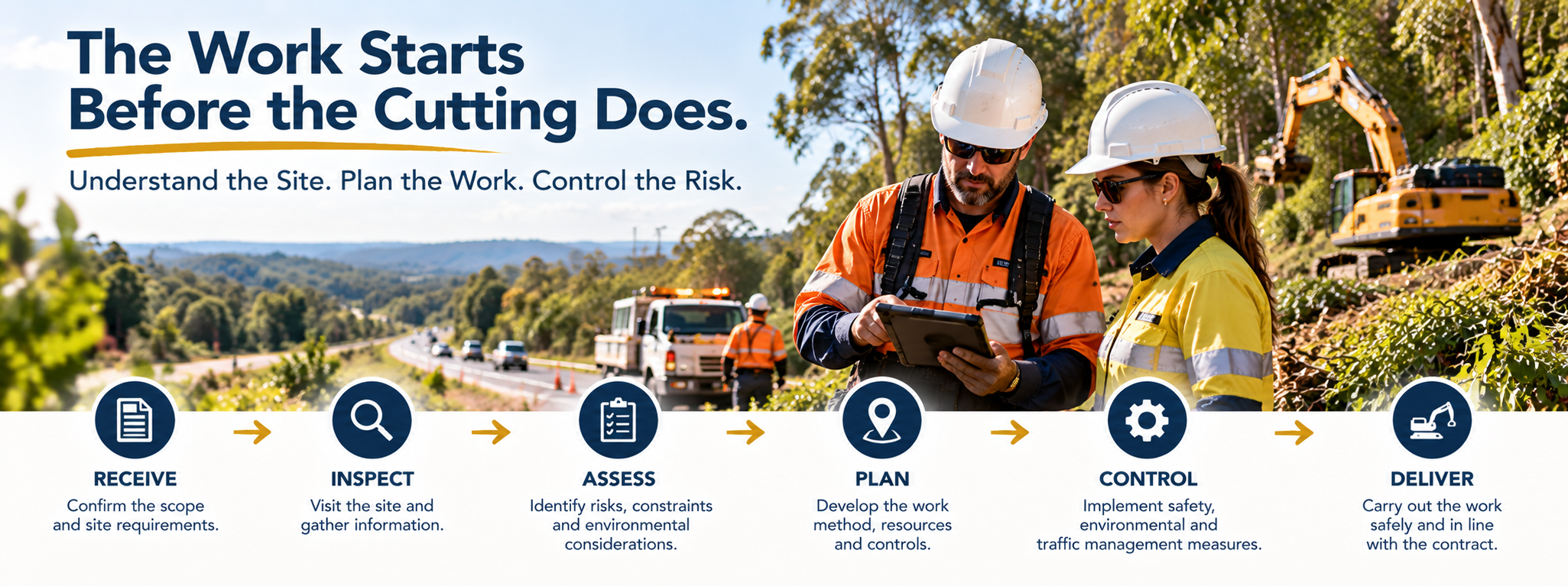
Every Site Starts with an Assessment
Vegetation management rarely happens in a controlled workshop.
The site itself determines how the work needs to be delivered.
Before crews commence, they may need to consider vegetation type, terrain, access, weather, traffic, utilities, environmental constraints, nearby properties, public activity and the equipment required.
A strong methodology might begin:
Receive
Inspect
Assess
Plan
Control
Deliver
Verify
Close
That assessment helps determine the crew, plant, controls and work method appropriate to the site.
It also demonstrates something important to the evaluator that you don't treat every job as though it's the same job.
Working Around Critical Infrastructure Changes Everything
Vegetation near roads, powerlines, rail infrastructure and other critical assets creates risks that ordinary grounds maintenance doesn't.
Crews may be working around:
Live electrical infrastructure.
Traffic.
Rail corridors.
Underground and overhead services.
Restricted access areas.
Steep or unstable terrain.
Public spaces.
Private property.
Waterways.
Communications infrastructure.
Operational facilities.
Your tender response may need to demonstrate how work is planned around those interfaces, including required permits, access authorities, exclusion zones, spotters, traffic management, isolations and communication protocols.
Technical vegetation skills matter.
So does knowing how to work safely around everything else.
The Right Crew for the Right Work
Not every vegetation management job needs the same people.
A roadside slashing crew has different requirements from arborists working near powerlines. Herbicide application requires different competencies again.
A strong tender can demonstrate how your business matches personnel and competencies to the task.
That might include:
Arborists.
Ground crews.
Machine operators.
Vegetation management workers.
Herbicide applicators.
Traffic management personnel.
Supervisors.
Environmental specialists.
Utility-qualified personnel.
Emergency response crews.
Rather than simply providing a list of qualifications, we can help explain how competency is verified, maintained and applied to the work.
Planning a Program is Different from Planning a Job
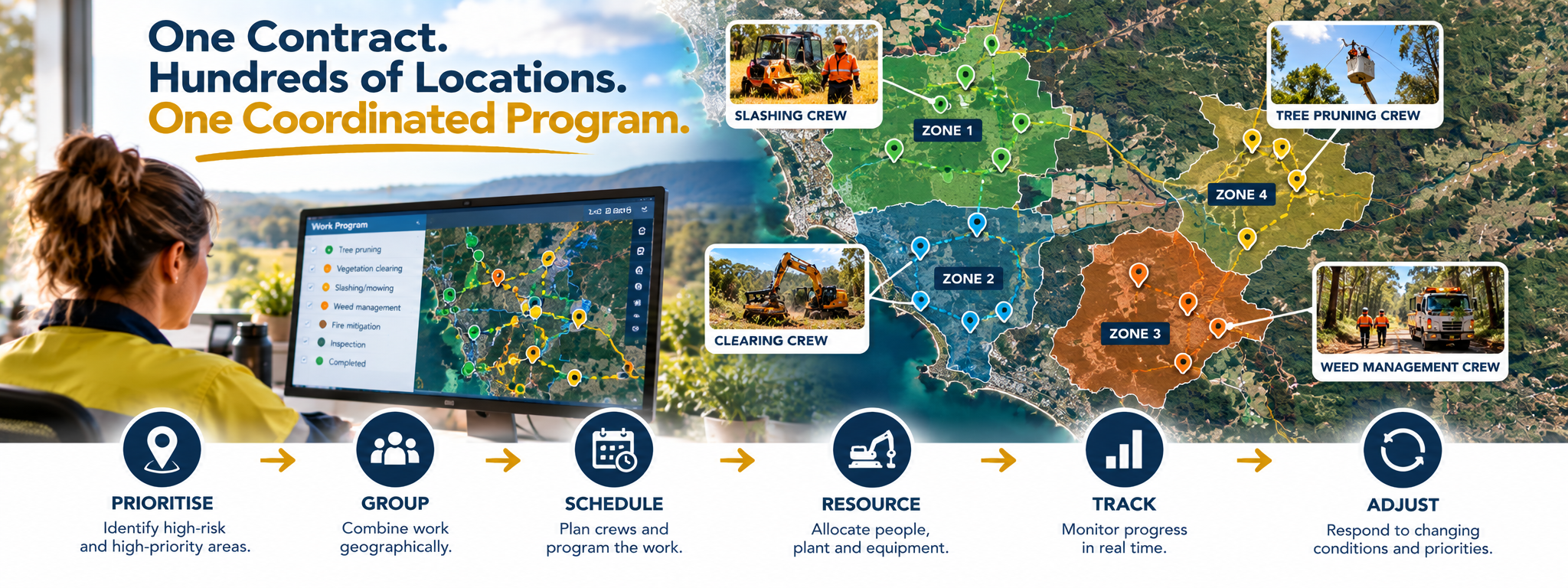
A single vegetation job can be scheduled.
A large vegetation management contract needs to be programmed.
You may be managing multiple crews, geographic zones, seasonal work, priority areas, access restrictions, weather and changing client requirements at the same time.
Your tender may need to explain how you:
Develop annual and seasonal programs.
Prioritise work.
Group work geographically.
Allocate crews.
Schedule plant and equipment.
Coordinate traffic management.
Manage property access.
Respond to weather.
Incorporate urgent works.
Reschedule delayed activities.
Track completed and outstanding work.
Maintain productivity across multiple crews.
The evaluator needs confidence that you can manage the volume of work as well as the work itself.
Reactive Work needs a Different Gear
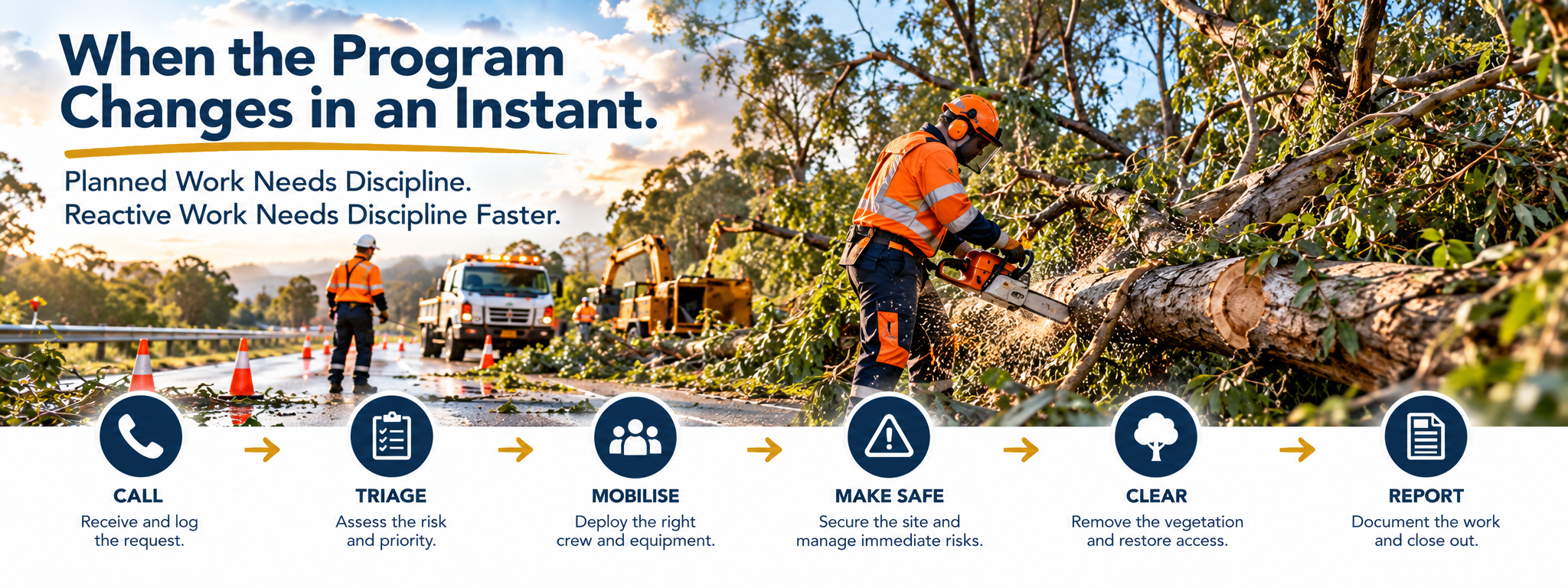
Storms don't check the maintenance program before bringing down a tree.
Vegetation management contracts may require urgent response to fallen trees, blocked roads, damaged vegetation, infrastructure hazards or other unplanned events.
Your tender can explain how urgent requests are:
Received
Triaged
Resourced
Attended
Made safe
Rectified
Reported
That may include after-hours contact arrangements, standby crews, emergency equipment, escalation protocols and coordination with emergency services, utilities or other stakeholders.
The important question isn't simply:
“Can you respond?”
It's:
“How does your business make that response happen?”
Safety Has to Reflect the Work
Vegetation management combines people, machinery and unpredictable environments.
The risks can be significant.
Depending on the contract, they may include:
Falling trees and limbs.
Chainsaws.
Woodchippers.
Mulchers.
Mobile plant.
Working at heights.
Elevated work platforms.
Powerlines.
Traffic.
Rail corridors.
Steep terrain.
Manual handling.
Hazardous chemicals.
Noise.
Flying debris.
Heat and UV exposure.
Snakes, insects and other wildlife.
Lone or remote work.
Bushfire conditions.
A tender response should do more than say you have a WHS system.
It should demonstrate how risks are identified and controlled in the field.
Environmental Management is Part of the Job
This is one industry where environmental management definitely shouldn't be a generic paragraph bolted onto the end of the tender.
The work itself interacts directly with the environment.
Your methodology may need to address:
Protected vegetation.
Significant trees.
Native vegetation.
Habitat.
Nesting fauna.
Waterways.
Erosion and sediment.
Soil disturbance.
Weed spread.
Biosecurity.
Herbicides.
Fuel and chemicals.
Green waste.
Mulch.
Noise.
Dust.
Rehabilitation.
Environmental exclusion zones.
Depending on the work, crews may need to identify environmental constraints before commencement and stop or modify work when unexpected conditions are encountered.
A strong response demonstrates that environmental requirements are part of planning and delivery, not something considered after the chainsaw starts.
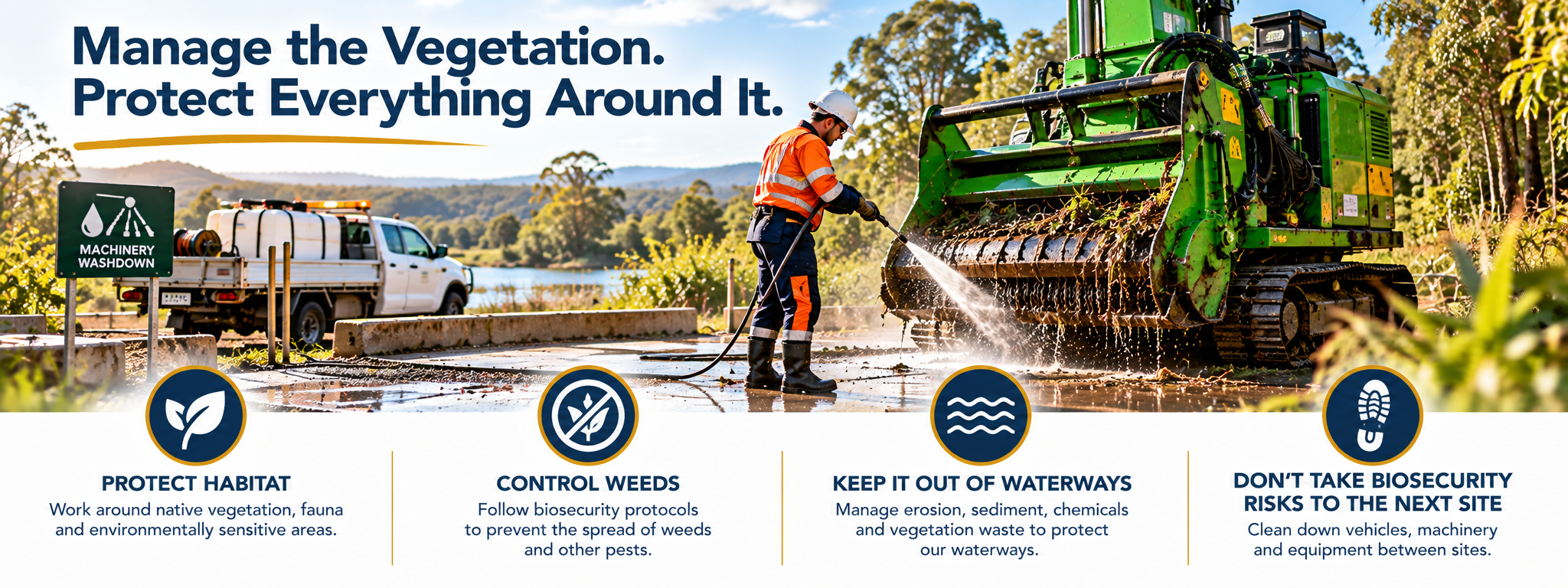
Biosecurity can Travel with the Crew
Vehicles, machinery, boots and equipment can move more than people between sites.
They can also spread weeds, seeds, soil-borne pathogens and other biosecurity risks.
Where relevant to the contract, your tender can explain controls such as:
Site-specific biosecurity requirements.
Vehicle and machinery hygiene.
Clean-down procedures.
Weed identification.
Movement restrictions.
Segregation of contaminated material.
Disposal requirements.
Record keeping.
Staff training.
These practical details can be particularly important for work across environmentally sensitive or geographically dispersed sites.
Vegetation Waste isn't Necessarily Waste
Tree limbs, branches, grass and other vegetation have to go somewhere.
A good tender response can explain how material is managed according to its type, condition and the client's requirements.
Options might include:
Chipping.
Mulching.
Beneficial reuse.
Green waste recycling.
On-site reuse where appropriate.
Removal to approved facilities.
Segregation of contaminated vegetation.
Appropriate disposal of declared weeds.
Where your processes keep usable organic material out of landfill, that's worth demonstrating.
Not because it sounds green.
Because it is a measurable environmental outcome.
Technology can make Field Work Visible
Large vegetation contracts can involve crews spread across a substantial area.
Digital systems can help connect what's happening in the field with the people managing the contract.
Depending on your systems, that might include:
Digital work orders.
GPS.
GIS mapping.
Crew allocation.
Mobile forms.
Site photographs.
Inspection records.
Time and attendance.
Asset or vegetation records.
Defect identification.
Completion records.
Client reporting.
The tender doesn't need three pages describing your software.
It needs to explain what the technology enables you to control, verify and report.
Quality is Knowing the Work has Actually Been Done Properly
Completing the work order isn't necessarily the same as completing the work.
There needs to be confidence that the required outcome has been achieved.
Depending on the contract, quality controls might include:
Supervisor inspections.
Photographic evidence.
GPS verification.
Work order completion records.
Vegetation clearance checks.
Pruning quality.
Site clean-up.
Environmental checks.
Client inspections.
Defect management.
Audits.
A simple quality process might be:
DELIVER → CHECK → RECORD → RECTIFY → VERIFY → CLOSE
The important part is showing who checks the work and what happens if it isn't right.
Working Around the Community
Vegetation management can be noisy, visible and disruptive.
The public may encounter crews, machinery, temporary road closures, pedestrian diversions, dust, noise or temporary restrictions on access.
Residents may also have strong opinions about trees.
Very strong opinions.
Depending on the contract, your tender may need to explain how you manage:
Resident notifications.
Property access.
Traffic.
Pedestrians and cyclists.
Noise.
Complaints.
Sensitive vegetation issues.
Public enquiries.
Work near schools or community facilities.
Private property interfaces.
Professional communication can be just as important to successful contract delivery as professional vegetation management.
Plant and Equipment Need to Match the Program
Capability isn't demonstrated by attaching a six-page plant register and hoping the evaluator enjoys reading it.
What matters is whether you have the right equipment, in sufficient quantity, available when it's needed.
Depending on your services, that may include:
Chippers.
Mulchers.
Excavators.
Forestry attachments.
Elevated work platforms.
Mowers.
Slashers.
Chainsaws.
Brush cutters.
Spray equipment.
Trucks.
Traffic management equipment.
Specialist arboricultural equipment.
Where equipment breakdown could affect service delivery, your response can also explain maintenance, replacement and contingency arrangements.
Mobilisation needs to Happen Before the Crews Roll Out
A large vegetation management contract may require substantial preparation between award and commencement.
Mobilisation might include:
Contract kick-off.
Confirmation of personnel.
Recruitment where required.
Competency verification.
Staff and subcontractor inductions.
Plant allocation.
Fleet preparation.
System configuration.
Uploading work and asset information.
Site familiarisation.
Access arrangements.
Environmental requirements.
Traffic management arrangements.
Supplier confirmation.
Reporting templates.
Emergency contacts.
Communication protocols.
A clear mobilisation plan demonstrates that people, plant, systems and controls will be ready before service commencement.
Government and Utility Vegetation Management Tenders
Councils, utilities, transport agencies and other government organisations procure vegetation management through individual projects, maintenance contracts, schedules of rates and supplier panels.
TenderWise can help develop responses covering:
Corporate capability.
Relevant experience.
Key personnel.
Service delivery methodology.
Program management.
Workforce capacity.
Plant and equipment.
Reactive and emergency response.
WHS.
Environmental management.
Biosecurity.
Quality management.
Risk management.
Mobilisation.
Business continuity.
Contract management.
KPIs and reporting.
Technology and systems.
Community engagement.
Subcontractor management.
Sustainability.
Social procurement.
Local participation.
Continuous improvement.
Value for money.
We don't start with a generic tender response.
We start by working out what this particular client needs confidence in.
Then we demonstrate it.
Already Written your Vegetation Management Tender?
We Can Review It Before You Submit
If you've prepared your tender internally, TenderWise can review it before lodgement.
We'll look for:
Questions that haven't been completely answered.
Requirements buried elsewhere in the tender documents.
Generic methodologies.
Missing evidence.
Unsupported claims.
Weak project examples.
Inconsistencies.
Compliance issues.
Missing attachments.
Environmental or WHS requirements that haven't been addressed.
Opportunities to demonstrate capability more clearly.
Presentation and readability.
Sometimes you don't need more words.
You need the right information in the right places.
The Things you do Automatically are Often your Best Evidence
Experienced vegetation management contractors make hundreds of decisions that barely register as decisions anymore.
You know when the weather makes a job unsafe.
You know which crew should attend.
You know when traffic management needs to change.
You know what machinery will work on the terrain.
You know when something environmental needs a second look.
You know when a tree isn't behaving the way it should.
You know what needs to happen before the crew moves to the next site.
Those things aren't mundane operational details.
They're evidence of experience and capability.
Our job is to uncover them and make sure the evaluator sees them too.
Need Help With a Vegetation Management Tender?
Whether you're tendering for utility vegetation management, roadside maintenance, arboriculture, vegetation clearing, weed management, fire mitigation or a government vegetation management contract, TenderWise can help.
Your people. Your equipment. Your experience - presented properly.
Clarity. Confidence. Capability. Let's do this!