

Plumbing Tenders
Plumbing Tender Writing for Commercial and Government Contracts
Plumbing tenders can cover everything from individual construction projects to multi-year maintenance contracts across large property portfolios.
Depending on the opportunity, you may need to demonstrate your capability in areas such as:
Commercial plumbing.
Hydraulic services.
Planned and preventative maintenance.
Reactive and emergency plumbing.
Drainage and sewer works.
Water services.
Hot water systems.
Backflow prevention and testing.
Thermostatic mixing valves.
Gas services.
Pumps and associated equipment.
Roof plumbing and stormwater.
Amenities upgrades.
Plumbing installations and refurbishments.
Fault finding and rectification.
Asset inspections.
Multi-site service delivery.
After-hours response.
Work order management.
TenderWise helps you bring those capabilities together into a response that is specific to the contract you're tendering for.
Not a generic company profile.
Not a list of everything your plumbers have ever done.
A response that answers the buyer's questions and gives them confidence in your ability to deliver.
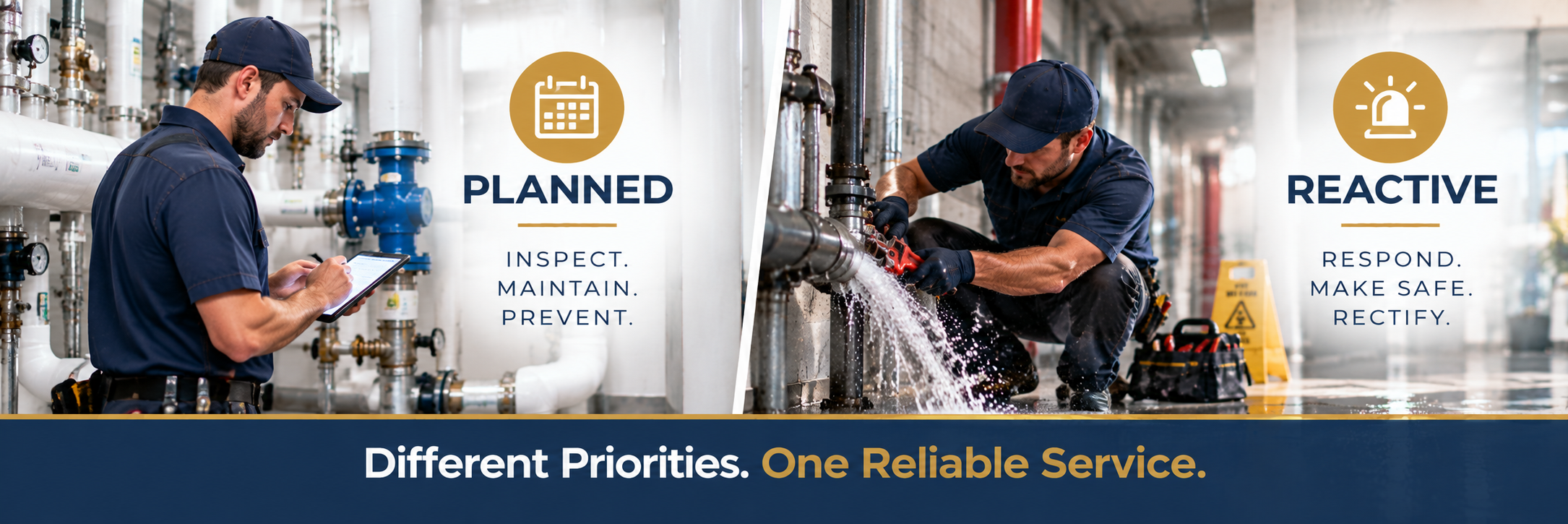
Reactive Plumbing is about more than Turning Up Quickly
When something goes wrong, response time matters.
But so does everything that happens between receiving the call and closing the job.
A strong reactive maintenance methodology might explain how you manage the following:

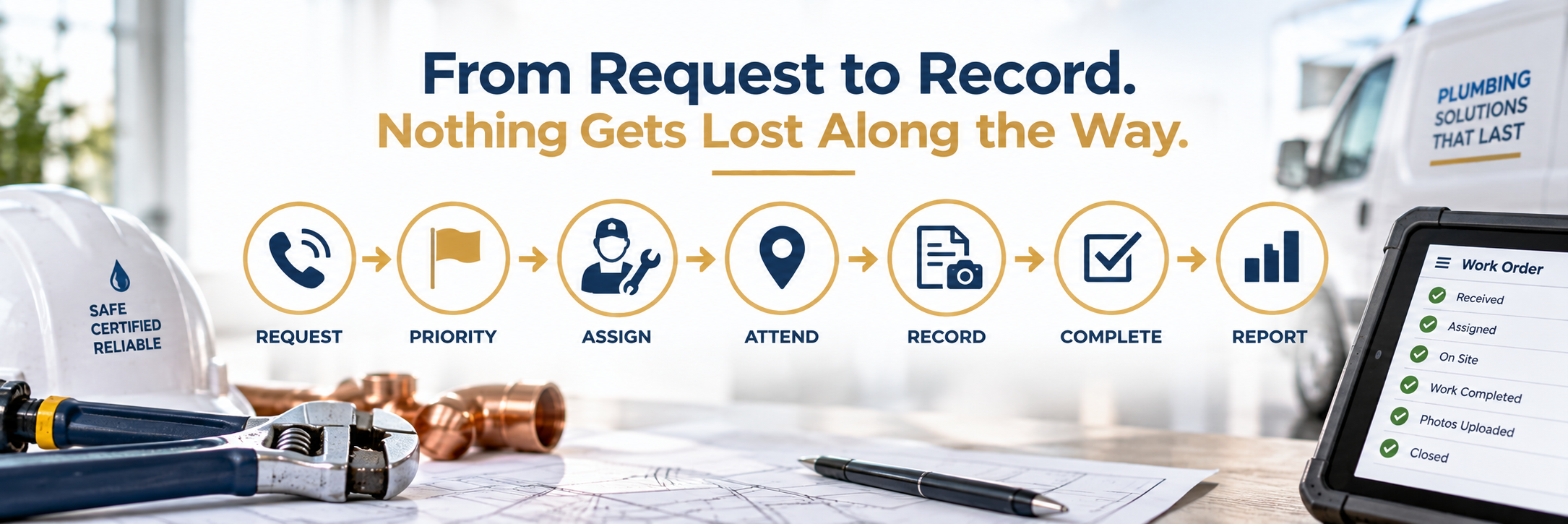
That can include how requests enter your system, how priorities are assigned, how the nearest appropriately qualified plumber is allocated, how urgent situations are made safe and how completed work is documented.
For critical incidents, the client may also want to know what happens when the first person attending can't solve the problem.
Who gets escalated?
How are additional resources mobilised?
How is the client kept informed?
A tender response should make those processes visible.
Planned Maintenance should Prevent the Emergency Call
Planned maintenance isn't just a calendar full of recurring jobs.
Done properly, it helps identify deteriorating assets, emerging faults and compliance issues before they become bigger problems.
Depending on the contract, your tender might need to explain how you manage scheduled inspections, testing, servicing, asset information, defects, follow-up works and reporting.
It may also need to demonstrate how planned activities are coordinated around building access and operational requirements.
We help turn your existing processes into a methodology that shows the evaluator:
what happens, who is responsible, how it is recorded and what happens when something isn't right.
Working in Occupied and Operational Facilities
We know that a burst pipe doesn't politely wait until the building is empty.
Commercial plumbing contractors may work in schools, offices, hospitals, community facilities, public buildings, residential complexes, sporting facilities, industrial sites and other operational environments.
That means technical plumbing capability is only part of the job.
Your tender may need to demonstrate how you will manage:
Access and permits.
Building occupants and visitors.
Service interruptions.
Water isolation.
Shutdown coordination.
Temporary services.
Noise and disruption.
Restricted work areas.
Hygiene and housekeeping.
Public safety.
Stakeholder notifications.
Reinstatement.
After-hours works.
The strongest responses show that you understand the environment around the plumbing work - not just the plumbing itself.
Sometimes the First Job is Making it Safe
Not every plumbing call can be permanently rectified on the first visit.
There may be specialist parts to source, additional investigation required, another trade needed or more substantial works to coordinate.
What matters is having a clear process.
Your plumber may isolate the affected service, stop further damage, establish temporary controls and communicate what happens next.
The tender response should explain how outstanding work is tracked through to final resolution, rather than disappearing into a maintenance system after the initial attendance.
That distinction can be particularly important for large facilities contracts where the client needs visibility over open jobs, temporary repairs and outstanding defects.
Work Orders Need to Tell the Whole Story
For maintenance contracts, the work order is more than an instruction to a plumber.
It's part of the client's contract record.
A well-managed job might capture:
Time received.
Priority.
Site and asset.
Assigned technician.
Attendance time.
Diagnosis.
Work completed.
Parts and materials.
Photographs.
Follow-up requirements.
Completion status.
Client sign-off.
Relevant compliance documentation.
Digital field service systems can help connect the office, field workforce and client reporting requirements.
We can help explain how your systems support visibility, accountability and accurate contract reporting, without turning the tender response into an advertisement for the software.
Compliance isn't Optional
Plumbing work sits within a substantial regulatory and technical framework.
The exact requirements depend on the work, jurisdiction and contract, but tender responses may need to demonstrate relevant licences, registrations, qualifications and competencies across the proposed team.
They may also ask how you ensure work complies with applicable legislation, codes, standards, manufacturer requirements and client-specific procedures.
Rather than simply saying:
“All work will comply with relevant Australian Standards.”
we help demonstrate how compliance is actually managed - through competent personnel, supervision, inspections, testing, documentation and verification.
Your Plumbers Represent the Client too
On a maintenance contract, your plumber may be the person the building manager, tenant, teacher, employee or member of the public sees when something has gone wrong.
Professional behaviour matters.
Clients may expect technicians to arrive in uniform, carry identification, communicate before interrupting services, protect the work area, explain what has been done and leave the site clean.
For contracts involving schools, health facilities or other sensitive environments, additional screening, inductions or behavioural requirements may apply.
A good tender response shows that your people aren't simply technically competent.
They're people the client can comfortably send into their buildings.
Safety Needs to Reflect Plumbing Work
A generic WHS response won't demonstrate much.
Plumbing can involve risks associated with excavation, confined spaces, working at heights, hot works, hazardous substances, manual handling, live services, pressurised systems, plant and equipment, contaminated environments and interaction with the public.
Depending on the contract, we can help develop responses covering:
WHS management.
Risk assessments.
SWMS.
Permits to work.
Isolation and lockout procedures.
Confined spaces.
Excavation.
Working at heights.
Hot works.
Hazardous substances.
PPE.
Emergency response.
Incident reporting.
Training and competency.
Subcontractor management.
The response should demonstrate that your safety systems are connected to the work your plumbers will actually perform.
Environmental Management that Makes Practical Sense
Plumbing works can create environmental risks that need to be managed properly.
That may include wastewater, sediment, chemicals, excavated material, packaging, removed fixtures, metals and other waste generated during service delivery.
Your methodology might explain how your team prevents contaminants entering stormwater systems, contains spills, segregates recyclable materials and disposes of waste appropriately.
There may also be opportunities to help clients reduce water consumption through leak detection, efficient fixtures, asset replacement or identification of recurring problems.
Again, we're interested in what you actually do.
Not three paragraphs about how deeply committed everyone is to Mother Earth.
Mobilisation: Being Ready From Day One
Large plumbing contracts can require substantial preparation before the first work order arrives.
Mobilisation may include:
Confirming contract personnel.
Establishing communication protocols.
Inducting plumbers and subcontractors.
Uploading asset and site information.
Configuring work order systems.
Establishing priority and escalation rules.
Confirming after-hours arrangements.
Allocating vehicles, tools and equipment.
Confirming suppliers and parts availability.
Establishing reporting templates.
Completing site familiarisation.
Confirming permits and access arrangements.
Testing invoicing and reporting processes.
We can develop a mobilisation plan that shows the client exactly how you will move from contract award to operational readiness.
Government Plumbing Tenders
Government and council plumbing contracts can be substantial opportunities.
They can also ask a substantial number of questions.
TenderWise can help develop responses covering:
Relevant experience.
Organisational capability and capacity.
Key personnel.
Service delivery methodology.
Planned maintenance.
Reactive maintenance.
Emergency response.
Work order management.
Mobilisation and transition.
WHS.
Quality management.
Environmental management.
Risk management.
Business continuity.
Contract management.
KPIs and reporting.
Customer service.
Subcontractor management.
Social procurement.
Sustainability.
Local participation.
Value for money.
Continuous improvement.
We start with the tender documents and work out what this particular buyer needs to know about your business.
Then we help you tell them.
Already Written Your Plumbing Tender?
We Can Review It Before You Submit
If you've prepared the tender internally, you don't necessarily need us to start again.
TenderWise can review your submission before lodgement and look for:
Questions that haven't been fully answered.
Requirements buried elsewhere in the tender documents.
Missing information or attachments.
Generic responses.
Unsupported claims.
Weak methodologies.
Compliance issues.
Inconsistencies between schedules.
Opportunities to provide stronger evidence.
Presentation and readability issues.
Think of it as another pair of eyes - except they're eyes that have spent a rather ridiculous amount of time reading tender documents.
Turn the Way you Work into a Stronger Tender
The things that differentiate a good plumbing contractor are often ordinary parts of the working day.
How quickly someone answers the phone.
How an emergency is triaged.
How plumbers communicate with building occupants.
How you source an unusual part.
How temporary repairs are tracked.
How supervisors check completed work.
How you identify recurring faults.
How you know a job is actually finished.
Those details may feel completely normal to you.
To an evaluator, they can be evidence that your business has the systems, people and experience to manage their contract properly.
Our job is to find those details and make sure they make it into the tender.
Need Help With a Plumbing Tender?
Whether you're tendering for a government plumbing panel, commercial maintenance contract, facilities management agreement or individual plumbing project, TenderWise can help.
Your trade. Your experience. Your capability - presented properly.
Clarity. Confidence. Capability. Let's do this!